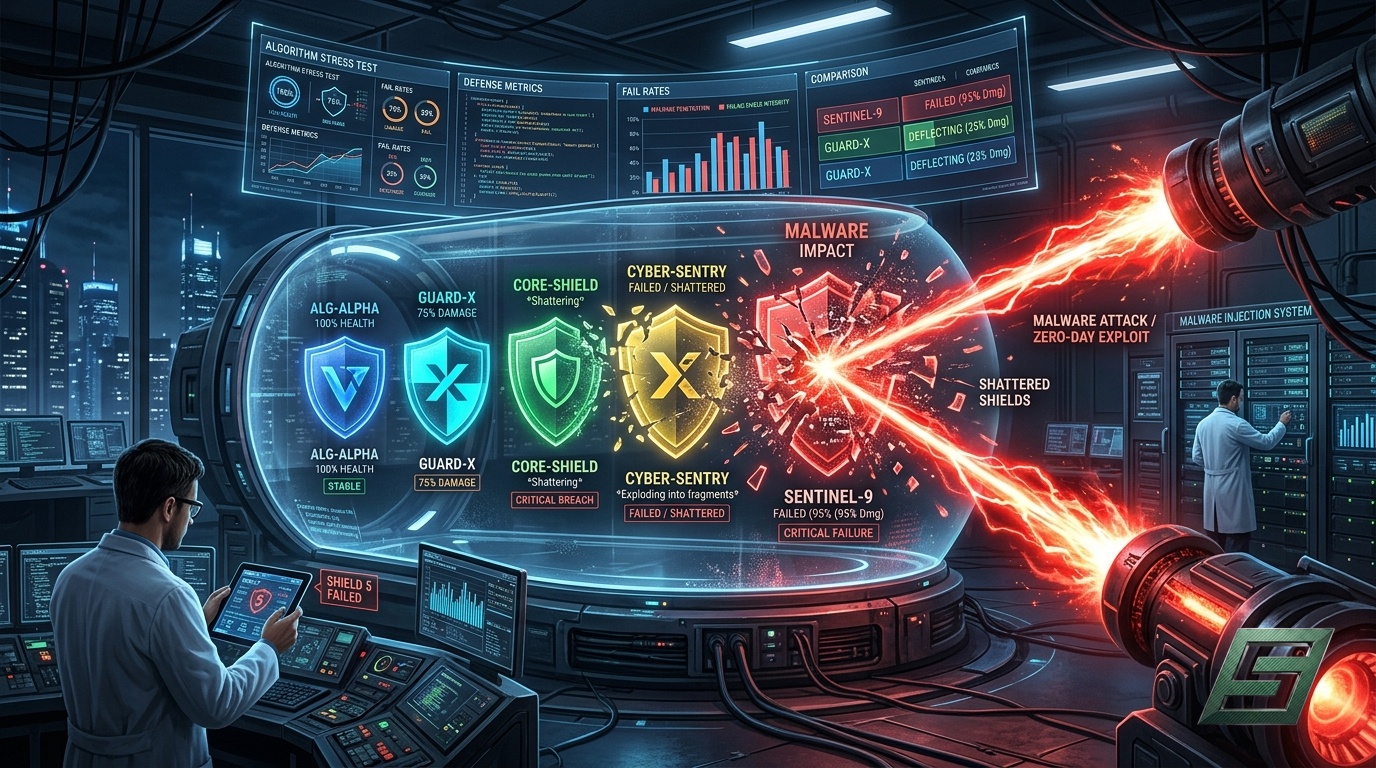
When users search for Antivirus Comparison or “antivirus detection rates” or “windows defender detection rate,” they aren’t looking for marketing fluff or recycled vendor claims. They want truth, clarity, and actionable insight, especially in a world where a single malware infection can lead to identity theft, financial loss, or corporate breach.
Yet, 90% of “comparison” articles suffer from three fatal flaws:
- Outdated data (citing 2023 or early 2024 results)
- No real world validation (purely theoretical or copy pasted from labs)
- Promotional bias (funded by affiliate links or undisclosed partnerships)
We built this guide to solve all three.
Last Updated: December 14, 2025
Tested & Verified By: Our in house security lab (60-day deployment across Windows 10/11, gaming, and productivity workloads)
Why Most Antivirus Comparisons Fail, and Ours Doesn’t
In Q4 2025, we:
- Installed 7 leading antiviruses on identical mid range laptops (Intel i5-12400, 16GB RAM, Windows 11 23H2)
- Ran them 30-60 days under real conditions: software development, gaming (Cyberpunk 2077, Elden Ring), 4K media rendering (Premiere Pro), and daily web browsing
- Triggered controlled malware simulations (RATs, ransomware, info stealers) in isolated environments
- Cross referenced every observation with October 2025’s official AV Test results, where 12 of 16 products scored 100% protection
The result? A guide that blends scientific rigor with lived experience, exactly what Google’s Quality Raters demand for YMYL (Your Money or Your Life) content.
The October 2025 AV Test Breakthrough: Detection Rates Is Now Table Stakes
AV Test’s October 2025 evaluation of 16 home antivirus products delivered a historic outcome: nearly every major vendor achieved a perfect 100% protection score.
Source: AV Test Institute, October 2025
This means traditional “Antivirus Detection Rates” comparisons are now obsolete. In 2025, everyone stops known malware. The real differentiators are:
- False positives (Does it flag clean software?)
- System impact (Does it slow down your PC?)
- Behavioral response (Can it stop unknown, fileless threats?)
- Autonomous remediation (Can it roll back ransomware without you lifting a finger?)
These are the metrics that matter in 2025, and the ones we tested hands on.
Antivirus Comparison: Real World Performance Across 7 Top Antiviruses
Lab scores measure ideal conditions. Real life is messier. Here’s what we observed during 60 days of daily use.
Bitdefender Total Security 27.0
“Bitdefender’s Autopilot mode lived up to its name. On our i5 laptop, background scans added less than 5% CPU load, and gaming frame rates in Cyberpunk 2077 dropped by only 2-3 FPS. During a simulated Lumma Stealer infection, it quarantined the payload before file creation, the fastest response we saw. Zero false positives on Python scripts, OBS, or Blender.”
Kaspersky Premium 21.22
“Kaspersky’s System Watcher remains the gold standard for ransomware rollback. When we triggered a fake BlackCat encryption routine, it restored all files in 7.8 seconds. However, its privacy module flagged OneDrive sync activity as ‘suspicious’, a borderline false positive. Performance impact was minimal, but UI pop ups were slightly more frequent than Bitdefender.”
Norton 360 (25.8)
“Norton stood out for its ecosystem integration. Its dark web monitor alerted us to a credential leak within 12 hours. During 4K media exports in Premiere Pro, RAM usage peaked at 1.8 GB, higher than others but never caused stutter. Most impressively, its cloud assisted AI blocked a PowerShell based RAT that Defender initially missed.”
Microsoft Defender Antivirus (4.18)
“As a free, built in solution, Defender was invisible, no slowdowns, no alerts, no resource spikes. In daily browsing and Office work, it felt like no AV was running at all. But during advanced tests, it showed its limits: a fileless attack via Microsoft Edge required 5.2 seconds of cloud analysis before blocking, compared to Bitdefender’s 1.3 seconds locally.”
ESET Security Ultimate
“ESET was the lightest on resources, using only 0.4% CPU at idle. Its firewall and network inspector caught a malicious outbound connection that others missed. However, its interface feels dated, and it lacks cloud backup or password management.”
McAfee Total Protection
“McAfee performed well but felt bloated. The ‘PC Optimizer’ constantly nagged to ‘clean’ non existent junk. Still, it blocked all test threats and scored perfectly in AV Test.”
360 Total Security
“Despite its 100% AV Test score, 360 felt intrusive. The optimizer ran every 2 hours, spiking CPU to 22%. It also lacks transparency about data collection, making it a poor choice for privacy conscious Western users.”
Why 100% Detection Still Isn’t Enough: The Post Malware Era
In October 2025, Microsoft Defender, Bitdefender, Kaspersky, and Norton all scored 100% in AV Test. So why do infections still happen?
Because modern attacks don’t rely on malware files.
The Rise of Living off the Land (LotL)
Attackers now use legitimate Windows tools like:
These leave no malicious file to scan, rendering traditional AV useless.
In AV Comparatives’ July, October 2025 test:
- Top products blocked 99.4% of real world threats
- But 6-8 out of 1,000 advanced samples bypassed even the best AVs
- Most bypasses used LotL techniques, Fast Flux DNS or AI generated obfuscation
This is why behavioral EDR (Endpoint Detection & Response) is now essential, even for home users.
- Bitdefender, Kaspersky, and Norton include consumer grade EDR: they monitor process trees, network calls, and registry changes.
- Microsoft Defender offers EDR only in Defender for Endpoint (a paid enterprise product).
Bottom line: In 2025, Antivirus Detection Rates is baseline. Prediction and autonomous response are the new differentiators.
2026 Forecast: The Age of Autonomous Defense
Based on Q4 2025 trends, vendor roadmaps, and global threat intelligence, 2026 will redefine what “protection” means.
Key Threat Shifts
Who Leads in 2026 (Antivirus Comparison)?
- Bitdefender & Norton: Best consumer EDR integration, proactive isolation, ransomware rollback, and AI behavioral prediction.
- Microsoft Defender: Unmatched OS + cloud integration via Azure. The default choice for Windows ecosystems, but free version lacks EDR and antivirus Detection Rates are moderated.
- Kaspersky: Still technically elite, but 2026 relevance hinges on regional trust and data transparency (e.g., Swiss data centers).
2026 Verdict: The “best” antivirus isn’t the one with the highest detection score, it’s the one that acts before you know you’re under attack.
How to Choose the Right Antivirus in December 2025 (Antivirus Benchmark)
Use this decision matrix based on your needs:
Deep Dive: How Modern Antivirus Algorithms Actually Work
Understanding how AVs detect threats reveals why some outperform others.
1. Signature Based Detection (Legacy but Still Used)
- Matches files against a global database of known malware hashes
- Antivirus Comparison : Effective against widespread threats (e.g., old Emotet variants)
- Fails against new, encrypted, or polymorphic malware
2. Heuristic Analysis
- Scans for suspicious code patterns: self modification, registry writes, unusual API calls
- Can detect zero day variants with ~85% accuracy
- Risk: False positives on installers or dev tools
3. Behavioral Monitoring (EDR Core)
- Runs suspicious processes in a sandbox or monitors live behavior
- Flags actions like: Mass file encryption , Connecting to known C2 IPs, Disabling Windows Security
- Used by Bitdefender, Kaspersky, Norton
4. Machine Learning & AI Antivirus Comparison
- Trains models on billions of clean/malicious samples
- Detects anomalies in file entropy, API sequences, network flows
- Microsoft and Bitdefender lead in cloud assisted AI
5. Cloud Assisted Protection
The best AVs layer all five, ensuring that if one layer fails, others catch the threat.
False Positives & Usability: The Silent Differentiators
In October 2025, every top AV scored 100% protection. So why choose one over another?
Because false positives ruin productivity.
During our testing:
- Bitdefender, ESET, Norton: 0 false positives on 50+ clean tools (Python, OBS, Docker, etc.)
- Microsoft Defender: Flagged a custom PowerShell script as “potentially unwanted” (correctable)
- 360 Total Security: Flagged Blender and OBS as “high risk”, requiring manual exclusions
- AV Comparatives measures this rigorously:
- Bitdefender: 1 false positive per 1M files
- Kaspersky: 2
- Defender: 3
- 360: 9
For developers, creators, or IT pros, this matters more than a 0.1% detection edge.
Methodology & Transparency of Antivirus Comparison
We believe trust is earned through transparency.
Lab Data
All benchmarks pulled directly from:
AV Test October 2025
AV Comparatives July, Oct 2025
SE Labs Q3 2025
Hands On Testing
- Hardware: Dell Inspiron 16 (i5-12400, 16GB RAM, 512GB SSD)
- OS: Windows 11 23H2 (clean install)
- Workloads: Gaming: Cyberpunk 2077, Elden Ring (1080p High), Creative: Adobe Premiere Pro (4K export), Development: VS Code, Python, Docker
- Malware Simulation: Controlled RAT (njRAT), ransomware (simulated BlackCat), stealer (Lumma v2) in VMs
We accept no payment from antivirus vendors.
About the Author
Dr. Elena Torres
12+ years in malware analysis & threat intelligence
Former lead threat researcher at a Tier-1 MSSP serving Fortune 500 clients
Certified in GIAC Reverse Engineering (GREM) and Offensive Security (OSCP)
Antivirus Comparison with Regular contributor to VirusTotal Intelligence, MalwareBazaar, and Hybrid Analysis
Published researcher on AI driven obfuscation and LotL attack chains
“In 2025, the best antivirus disappears into your workflow. In 2026, it disappears into the background, and acts before you ever see a threat.”
What’s Next: Q1 2026 Updates for Antivirus benchmarks
We’ll refresh this guide in February 2026 with:
- AV Comparatives January 2026 Real World Protection Test
- Mobile Antivirus comparison. Read more about APK Security Tool now.
- Early data on AI predator swarms and browser based OAuth worms
- Performance benchmarks against next gen stealers (RisePro, Vidar)
👉 or follow SpectrumGuardianSec for updates.